Temp Gauge Readings
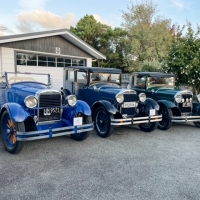
The temp gauge on the Pacemaker reads - 120 degrees at the half way mark and 160 degrees at just below the 3/4 mark. I used a laser temp reader to check and used two different units in the head with very similar results. Therefore it seems the gauge is the issue and just reading high. Is this common? I can live with it, knowing where normal running shows, but I am wondering if there is an adjustment for the gauge or a resistor maybe missing in the loom somewhere?
All help will be appreciated
All help will be appreciated
0
Comments
-
No there is no adjustment , and yes they are known for inacuracy. However since you have reserched your situation and know whats going on jsut watch for a change from "It's Normal",
Roger0 -
I HAVE DONE JUST AS YOU BUT I ALSO PUT 2 SMALL CHALK LINES ON THE TEMP GAUGE ONE FOR 160 AND ONE FOR 200 (I TOOK A PEICE OF CARD BOARD AND COVERED THE RAD TO GET IT UP THAT HIGH)
NOW I KNOW JUST WHERE I'M AT WHEN OUT ON THE ROAD0 -
I'm curious, Ernie, what year is your car? Is your fuel gauge accurate? IN 51 and later cars there is a voltage drop behind the fuel/ temp gauge, that drops voltage from 6 to @ 5v If this reducer fails what would be the result? A high reading or no reading? Can anyone answer that?0
-
To understand operation and adjust gauges consult the gauge section of a Motors Manual covering the year of your car. Comprehensive information covering the questions you pose is found therein.0
-
Thanks all for your input. I am comfortable no knowing where "normal" is but thought it would be nicer to have the gauge showing a normal reading. I will not let this small thing dampen our enjoyment of the car.
I bought a NOS thermostat to fit, tested it in a pot of hot water on the stove and a cooking thermometer to be sure it worked OK. When I installed it, the gauge went higher to the 3/4 mark which started me investigating the actual temperature readings.
Since posting this last night I have talked with my neighbour who is an auto electrician. He is going to bring home a resistor to put in the line to see what difference that may make. I will advise the outcome.
RonS - it is a 1950 Pacemaker. I have totally rewired as close as possible to the wiring diagram (all the wiring had been cut and stripped from the car when I got it). The fuel gauge is pleasingly quite accurate.0 -
Ernie, then that is not an issue on your '50, but the question still stands.0
-
The voltage regulator used in 51> Hudson gauges either shorts or open when failing.
'The gauges from those years use a chopped 5 volts to operate. Open = no reading Short = inaccurate higher than normal reading.0 -
Where did you shoot the laser? If you shot at the rad cap opening the temp gage sending unit would be in a higher temp area of the system. If you have not done so, shoot the side of the head next to the temp sending unit and compare the readings taken there with your prior results. I have seen as much as a 15 degree difference between the rad cap opening and th temp gage.
Lew Mendenhall0 -
I would think the only important reading is the reading by the sending unit. After all that is what the gauge is seeing ,
Roger0 -
Lew - yes it was directed at the head right by the sending unit and all around that point to get the reading.
Ken - running a 6V battery. The needle does not change whether idling (amp light glowing) or higher revs which would indicate no issue with the generator / regulator system? If the ohms rating be the cause then once we have tried a resistor, that may fix the reading issue.0 -
The gauge system used thru '50 was built to be tolerant of modest voltage changes, such as going from 6v to 7v when the generator speed increases. They're not a resistive type gauge, but operate on an "average current" basis. The sending units and the gauges contain bi-metallic strips that are responsive to the current. '51 and later gauges are purely resistor-based, so they need the little voltage regulator that's found in the power feed circuit for these systems.0
-
Update
After discussing with my auto electrician, he gave me a 37ohm resistor to try. I put this in the line from the sender - oops, made it worse. The less the current through the gauge the higher the reading.
I therefore needed to increase the current through the gauge - I then attached the resistor from the sending unit line to earth. 37 ohms was too much as the temp reading was too low.
I have now tried a 56ohm resistor to earth and so far looking good and much more accurate from the tests I have done running in the garage. Will have a test drive tomorrow to see how it goes over an extended period.
An interesting exercise and discussion to date.0






This discussion has been closed.
Categories
- 37.1K All Categories
- 121 Hudson 1916 - 1929
- 21 Upcoming Events
- 106 Essex Super 6
- 28.7K HUDSON
- 601 "How To" - Skills, mechanical and other wise
- 995 Street Rods
- 151 American Motors
- 185 The Flathead Forum
- 49 Manuals, etc,.
- 79 Hudson 8
- 45 FORUM - Instructions and Tips on using the forum
- 2.9K CLASSIFIEDS
- 614 Vehicles
- 2.2K Parts & Pieces
- 78 Literature & Memorabilia
- Hudson 1916 - 1929 Yahoo Groups Archived Photos